events
2015 Buckley Scholar
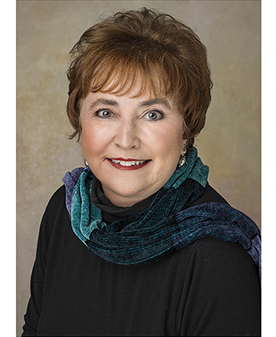
The Cooperstown Graduate Program, Cooperstown Alumni Association, and Buckley Selection Committee are honored to announce Peggy Bulger as the 2015 Bruce Buckley Scholar. Peggy Bulger will speak on April 16 at the Fenimore Art Museum Auditorium at 7:30 PM. Bulger is very excited to be invited to Cooperstown to discuss her extraordinary career in folklore. Her lecture, entitled Florida Folklife: Searching for Authenticity in the Land of Disney, focuses on field experiences from her career in Florida.
A native of Albany, New York, Bulger was inspired by the various musical folk traditions that surrounded her in upstate New York, such as the music of Pete Seeger, Larry Older and Sarah Cleveland. . She earned her bachelor’s degree in Fine Arts from SUNY Albany in 1972. Upon graduation, Bulger met with Bruce Buckley himself, who encouraged her to pursue a master’s degree in Folk Studies from Western Kentucky University, which she completed in 1975. Bulger then went on to earn a Ph.D. in Folklore and Folklife from the University of Pennsylvania in 1992. Her dissertation, Stetson Kennedy: Applied Folklore and Cultural Advocacy, focused on Florida folklorist, author, and activist Stetson Kennedy. Her working relationship for over 30 years with Kennedy, who infiltrated the Ku Klux Klan and exposed many of their secrets, defined for Bulger the power of folklore.
Bulger started her career in her adopted home of Florida as the State Folk Arts Coordinator in 1975, and soon after became administrator of the Florida Folklife Program from 1976 to 1989. Her expertise and status as Florida’s first state folklorist enabled Bulger to create the Florida Folklife Collection, housed at the State Archives of Florida, which includes the work of several prominent folklorists.
Bulger helped to develop the Florida Folklife Program into a multidimensional program by creating apprenticeship programs, educational videos and publications, workshops, and exhibits, before leaving to work as the Folk Arts Director and Senior Program Officer for the Southern Arts Federation in Atlanta in 1989. In 1999, she was named director of the Library of Congress’ American Folklife Center until her retirement in 2011. At the Library of Congress, Bulger was instrumental in acquiring the Alan Lomax Collection, which is the largest, unparalleled, collection of folk art in America. The acquisition of this collection brought 70 years of Lomax’s work together at the Library of Congress, where it has found its permanent home.
Among these many accomplishments, Bulger is an author, editor, and producer of several books television documentaries and musical productions. She currently serves on the Florida Folklife Council, a position that is appointed by the Secretary of State, and she is President of the Florida Folklore Society. Bulger is a past president of the American Folklore Society and is recipient of the Benjamin A. Botkin Prize for excellence in the field of Public Folklore.
The Bruce Buckley Lectureship
CGP’s legacy is dedicated to the study of folklore and folk life. Until 1979, CGP offered a degree in American Folk Culture, and folklorists throughout the country recognized the program for its quality and dedication to the field.
Although no longer a degree program, folk studies remains an important component of the CGP education and curriculum. A fieldwork course is required during the first year of study in which students learn how to conduct oral histories and record traditions and stories of the past.
CGP also holds an annual lecture on a topic in folk studies. Every year, the program invites a scholar in the field to share his or her expertise, experiences, and advice through a free evening presentation for the entire community and a professional seminar for students.
About Bruce Buckley
Bruce R. Buckley was a young folklorist, musician and movie producer who, along with Louis C. Jones, developed the Cooperstown Graduate Program. Bruce was a brilliant and inspiring teacher. His courses sent students out into the communities of central New York to gather music, measure buildings, sample local foodways, and document regional traditions. Bruce's approach to learning and his methods continue to inspire those who studied with him. Over six hundred former CGP students filling significant leadership positions in museums and on university campuses across the country are one of his greatest legacies.
As a fitting tribute to Bruce, the Cooperstown Graduate Program established the Bruce Buckley Lectureship. This special endowment continues to spark the excitement that Bruce brought to the community more than 35 years ago. The Buckley Lectureship brings a significant folklorist to Cooperstown each year to lecture on their current research for students and members of the local community.
Past Buckley Scholars
2012- Dr. Jane Beck
Dr. Beck earned a Master of Arts (1964) and PhD (1969) in Folklore and Folklife Studies from the University of Pennsylvania. Beck's award-winning work has focused on Vermont history and folklore from 1970 to the present. Dr. Beck founded the Vermont Folklife Center in Middlebury, Vermont in 1983 and served as the Executive Director until 2007. Beck has received multiple awards for her research in Vermont folk studies, including the Governor's Award for Extraordinary Vermonter (1990), the Benjamin Botkin Award from the American Folklore Society (1996), the Vermont Governor's Award for Excellence in the Arts (2004), and the Lifetime Achievement Award from The Center for Research on Vermont (2011). Dr. Beck's research has been published in various print and media formats, on topics ranging from folk medicine to New England folk art to oral history projects.
2011 - Henry Glassie '65
For over forty-five years, Dr. Henry Glassie ('65) has been the foremost folklorist in the United States. Part of the Cooperstown Graduate Program class of 1965, Glassie helped change the face of the folklore field with his (now classic) book, Folk Housing in Middle Virginia. He is a former president of the American Folklore Society, the Vernacular Architecture Forum, and was chosen by President Bill Clinton to serve on the National Council on the Humanities (2001). Glassie is currently College Professor Emeritus of Folklore at Indiana University Bloomington, where he has authored over ten of books, including his latest, Prince Twins Seven-Seven.
2010 - Dick Case '67
Dick Case credits the CGP American Folk Culture Program with fostering his appreciation of local history and his interest in folklife and historic preservation. These and other subjects—often well beneath the scrutiny of history—have filled thousands of newspaper columns throughout his career as journalist and author. Everywhere in Central New York “Dick Case” is a household name. Case has been recounting stories about the talents, triumphs, and tragedies of Central New Yorkers in print for over 40 years. First as a newspaper columnist in the Syracuse Herald-Journal, later at The Post-Standard, and his three books. His latest book, Remembering Syracuse, chronicles the tragedies and triumphs of the families, friends and neighbors who call Syracuse home. Atthe 2010 Bruce Buckley Lecture, Observations of a Lifelong Storyteller, he reflected on his experiences in his career as a writer and the role the CGP American Folk Culture Program played in his professional development.
2009 - Varick Chittenden '76
Varick Chittenden graduated with an M.A. in American Folk Culture from the Cooperstown Graduate Program in 1976. He taught at SUNY Canton for 36 years and now holds the title of Professor Emeritus of English and Folklore. During his career, Varick curated a number of important folk art exhibitions and authored several scholarly works, including Danes of Yates County (1985) and Vietnam Remembered: The Folk Art of Marine Combat Veteran Michael D. Cousino, Sr. (1995). His interests include upstate regional culture, folk art, traditional crafts, foodways, and oral storytelling traditions. Varick is the founder of Traditional Arts in Upstate New York (TAUNY). He currently serves as Heritage Center Project Director at TAUNY and is responsible for the Register of Very Special Places Project.
2008 - Amanda Dargan and Steven Zeitlin of City Lore
City Lore was founded in 1986 to produce programs and publications that convey the richness of New York City's cultural heritage. Its projects include: The People's Poetry Gathering, Place Matters, People's Hall of Fame, Culture Catalog, music and dance workshops, etc. As the Education Director for City Lore, Amanda Dargan directs and develops education components for all City Lore public programs and publications. She also directs curriculum development and teacher and teaching artist training. Steven Zeitlin is the Executive Director of City Lore. He is a commentator on nationally syndicated radio shows, Crossroads and Artbeat, and develops segments on "The Poetry of Everyday Life" for The Next Big Thing, heard on National Public Radio.
2007 - Susan G. Davis, Ph.D. '79
Susan Davis is the author of Parades and Power: Street Theatre in Nineteenth Century Philadelphia (1986) and Spectacular Nature: Corporate Culture and the Sea World Experience (1997). She has also written on public and corporate space and culture and the history of leisure and tourism landscapes.
2006 - Joe Hickerson
For more than 50 years, Joe Hickerson has performed more than a thousand times throughout the USA and in Canada, Finland and Ukraine. His repertoire includes a vast array of folksongs. Pete Seeger has called him "a great songleader." Joe calls himself a "vintage pre-plugged peleo-acoustic folk-singer." In 1960 he wrote the 4th and 5th verses of Where Have All the Flowers Gone. Joe also has a career as a folklorist, ethnomusicologist, archivist, and librarian. For 35 years he was Librarian and Director of the Archive of Folk Song/Culture at the Library of Congress.
2005 - Susan Eleuterio '77
Susan Eleuterio is a professional folklorist specializing in ethnic group material culture. She is the author of Irish American Material Culture: A Directory of Collections, Sites and Festivals in the United States and Canada (1988). She has conducted fieldwork and developed public programs including exhibits, performances, folk arts and oral history workshops and residencies in museums and schools. She formerly served as the Director of Ethnic and Folk Arts, Literature and Presenters Programs for the Illinois Arts Council. She is co-creating a non-profit, Company of Folks, to research, preserve, and present traditional and folk culture of the Chicago metropolitan area.
2004 - William K. McNeil, Ph.D. '67
For almost half of his sixty-four years of life, William McNeil served as folklorist for the Ozark Folk Center in Mountain View, Arkansas and helped build its Ozark Cultural Resource Center into a major research facility. At home in the library, as well as in the field, Bill was a major resource of masses of folklore information.
2003 - Nicholas Vrooman '79
Nicholas Vrooman is the author of numerous articles and books, including Iron Spirits (1982), Turtle Mountain Music (1984), "Land of Vision: Folklore/Folklife and History on the Northern Plains" in North Dakota History (1989), Plains Chippewa/Metis Music from the Turtle Mountains (1992), and Songs for Asking (1997). He currently teaches at the University of Montana while completing his doctorate, and serves as Indian Education Specialist to the Montana Office of Public Instruction on issues of the "Indian Education for All" constitutional mandate.
2002 - Elaine Eff, Ph.D. '76
Elaine Eff authored the book, You Should Have Been Here Yesterday: A Guide to Cultural Documentation in Maryland (1995), that has served as a handbook for those who want to learn how to use oral history and other methods to record the history of their communities. She contributed oral histories of a now-vanished generation of lighthouse keepers to Ross Holland’s Maryland Lighthouses of the Chesapeake Bay. She serves as co-Director of Maryland Traditions, a partnership of the Maryland Historical Trust and the Maryland State Arts Council that discovers and sustains traditional arts and culture.